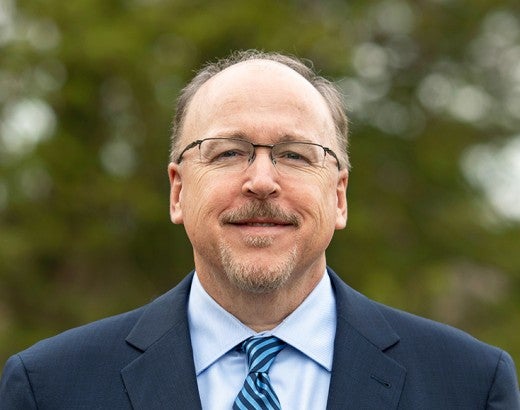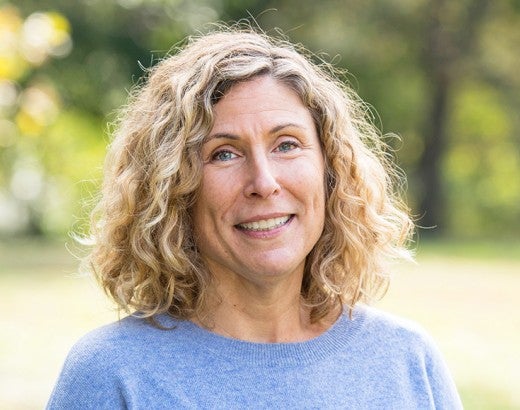
Wayne Pacelle

President & CEO

The Humane Society of the United States

Wayne Pacelle (PUH'-cell-ee) is the president and chief executive officer of The Humane Society of the United States. Pacelle took office June 1, 2004 after serving for nearly 10 years as the organization's chief lobbyist and spokesperson.   

During his tenure as HSUS president and CEO, Pacelle has spurred major growth for the organization, which is now the nation's largest animal protection organization with 11 million members and constituents, annual revenue of $130 million, and assets of $200 million. The growth has partly been achieved through successful mergers with other animal protection organizations. In 2004, Pacelle and Michael Markarian (president of The Fund for Animals and now Chief Operating Officer at HSUS) helped engineer the corporate combination of The HSUS and The Fund for Animals, the national organization founded by Cleveland Amory. In 2006, he was the architect of a combination with the Doris Day Animal League, founded nearly 20 years ago by iconic actress Doris Day, and also one of the major American animal protection organizations. More recently, he created the Humane Society Veterinary Medical Association, after the formerly named Association of Veterinarians for Animal Rights was brought into the HSUS family.

Pacelle has also dramatically grown the animal care programs of The HSUS. He recently arranged a corporate combination with the SPCA Wildlife Care Center of Broward County, Fla.—now the fifth animal care center of The HSUS. The HSUS created the Duchess Sanctuary for horses in Oregon in 2008, and acquired the Cleveland Amory Black Beauty Ranch and the Ramona Wildlife Center in 2005 with the union with The Fund for Animals. The HSUS provides services for more animals than any other organization in the United States.

Since 1990, Pacelle and Markarian have played a central role in more than 25 successful statewide ballot measure campaigns. In 2008, he led the effort to pass Proposition 2 in California, halting the intensive confinement of 20 million farm animals. Prop 2 was the third in a series of anti-factory farming measures he and HSUS advanced, with Florida voters banning the use of gestation crates for housing breeding sows (Amendment 10 in 2002) and Arizona voters putting a stop to the use of gestation and veal crates (Proposition 204 in 2006). He led successful efforts to ban the use of bait and dogs in hunting bears, cougars, and bobcats in Colorado (Amendment 10 in 1992), Massachusetts (Question One in 1996), Oregon (Measure 18 in 1994), and Washington (Initiative 655 in 1996); to ban the use of cruel traps in California (Proposition 4 in 1998), Colorado (Amendment 14 in 1996), Massachusetts (Question One in 1996), and Washington (Initiative 713 in 2000); to outlaw cockfighting in Arizona (Proposition 201 in 1998), Missouri (Proposition A in 1998), and Oklahoma (State Question 698 in 2002); and to ban mourning dove hunting in Michigan (Proposal 3 in 2006), among other ballot measures.  In 1996, Campaigns and Elections named him "a rising star in politics, "largely for his achievements in crafting, qualifying, and passing statewide ballot initiatives."

He led successful campaigns to defeat ballot measures hostile to animal protection in California (Proposition 197 in 1996), Oregon (Measure 34 in 1994), Arizona (Proposition 201 in 2000) and Oklahoma (State Question 698 in 2002). Pacelle previously served on the national advisory board for the Initiative and Referendum Institute, and is a frequent speaker on the initiative and referendum process.

He and HSUS have worked for the passage of more than 500 new state laws just since 2001, and he has helped to pass more than 25 federal statutes to protect animals in the last decade – including laws to protect the great apes in their native habitats (2000), to halt any interstate transport of fighting animals (2002) and to make interstate transport of fighting animals a felony (2007), to halt commerce in big cats for the pet trade (2003), to establish federal standards to include pets in disaster planning and response (2006), and to ban the import of puppy mills from foreign countries (2008). He has also been the architect of a large number of amendments to halt funding for programs to harm animals, including a program to halt funding for the mink industry and the slaughter of American horses for human consumption. He has testified before U.S. House and Senate committees on a wide range of animal protection issues, on subjects relating to the mistreatment of downer cows, the banning of "canned hunting," securing adequate funding for the Animal Welfare Act and other wildlife and animal protection programs, halting the trophy hunting of threatened and endangered species, combating cockfighting and dogfighting, stopping horse slaughter, cracking down on puppy mills, stemming the exotic pet trade, halting bear baiting, protecting Yellowstone's buffalo, and dealing with Chronic Wasting Disease.

Pacelle's work on animal issues has been featured in thousands of newspapers and magazines across the country. He has been profiled in The New York Times, The Wall Street Journal, The Washington Post and Los Angeles Times, and has appeared on almost all of the major network television programs – including 60 Minutes, The Today Show, The News Hour with Jim Lehrer, Larry King Live, Good Morning America and ABC's Primetime Live.

In addition, Pacelle is an experienced writer with numerous pieces published in a variety of newspapers, journals, and magazines including Human Dimensions of Wildlife, Campaigns & Elections, and George Wright Society. He has written columns for dozens of major daily newspapers, including The Washington Post, Los Angeles Times, The New York Times, Chicago Tribune, Baltimore Sun, Dallas Morning News, Detroit Free Press, St. Petersburg Times, Seattle Times and San Francisco Chronicle. He has written chapters in a number of books dealing with animal issues and the initiative process.

Pacelle is founder of Humane USA, the non-partisan political arm of the animal protection movement, and the founder of the Humane Society Legislative Fund, a 501(c)(4) social welfare organization that lobbies for animal welfare legislation and works to elect humane-minded candidates to public office. Working with both organizations, Pacelle has helped to defeat some of the strong anti-animal welfare politicians in the United States, including Rep. Richard Pombo of California (2006) and Rep. Chris John of Louisiana (2004).

Prior to joining The HSUS, Pacelle served as the executive director of The Fund for Animals (1988-94). Pacelle also served as associate editor (1087-88) and, later, president of the board for The Animals' Agenda magazine, and as an guest instructor for the U.S. Fish and Wildlife Service Refuge Training Academy. He serves on the board The HSUS Wildlife Land Trust, Humane Society International, and is soon to become a board member of the Global Animal Partnership.  In 2006, he co-founded the National Federation of Humane Societies (NFHS), a trade association principally representing local humane societies across the nation, and he now serves on the board of that organization.

In 2008, the Los Angeles Times reported, "Pacelle has retooled a venerable organization seen as a mild-mannered protector of dogs and cats into an aggressive interest group flexing muscle in state legislatures and courtrooms."  In 2007, The New York Times reported, "The arrival of Wayne Pacelle as head of the Humane Society in 2004 both turbo-charged the farm animal welfare movement and gave it a sheen of respectability." In 2008, Supermarket News included Pacelle on its annual Power 50 list of influential individuals in food marketing, writing that "there's no denying his growing influence on how animal agriculture is practiced in the United States."

Pacelle was named one of NonProfit Times' "Executives of the Year" in 2005 for his leadership in responding to the Katrina crisis. In both 2008 and 2009, NonProfit Times named Pacelle to its annual "Power and Influence Top 50" nonprofit executives. In 2008 the National Italian American Foundation presented Pacelle with the Special Achievement Award in Humanitarian Service.

Pacelle received his B.A. in History and Studies in the Environment from Yale University in 1987.

For journalists seeking interviews with HSUS experts, please see our directory of media contacts