• Share to Facebook
    • Twitter
    • Email
    • Print

October 7, 2009

Questions and Answers About Cosmetic and Product Testing

For more information about animals used in cosmetic and product testing, see Cosmetic and Product Testing, A History of Cosmetic Testing, Questions and Answers About Animal Testing of Pesticides, Questions and Answers About Animal Testing of Chemicals and Questions and Answers About Animal Testing to Identify Endocrine Disrupting Substances.


Q: How are animals used for cosmetic and product testing?
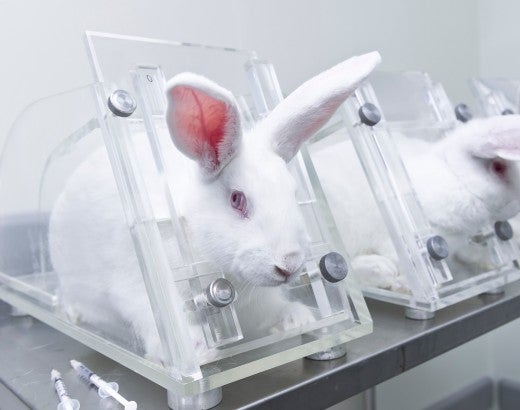
A: Animals are often used to test for the toxicity of many products that contain chemicals, including cosmetics.  There are many different kinds of toxicity tests (or “safety” tests) which aim to identify specific types of adverse effects, or “endpoints”.  Such endpoints can include eye irritation/corrosion, skin irritation/corrosion, neurotoxicity, reproductive or developmental toxicity, and carcinogenicity (cancer-causing toxicity), to name a few.  There are more general tests that aim to identify effects from a single exposure to a substance (“acute”) or multiple exposures (“repeat dose”).  There are also tests that look to see the effects of a one month exposure (“subacute”), three month exposure (“subchronic”) and a two year exposure (“chronic”).

Q: What are "alternatives to animal testing"?
A: An alternative is a test method that can replace animals, reduce the number of animals used, or refine animal use so that they experience less pain, distress or suffering.

Q: Why don’t scientists just stop using animals?
A: Although there are some replacement alternatives, not all tests have a non-animal alternative developed. Many endpoints, such as carcinogenicity, do not have an alternative that has been validated as a substitute to animal test methods.

Q. Why do some companies still test cosmetics on animals, while others don’t?
A: Many cosmetic ingredients have been tested for safety at some point in the past. Some companies only use those ingredients that already have safety data, thus eliminating the need to test on animals.  Others use new formulations in which the side effects are unknown. Often, these new formulations are tested on animals, while sometimes alternatives are used.  It all depends on whether a validated alternative exists.

All consumer products must be proven safe before being sold to the public. However, there is no law that says that animals must be used to test for safety.  That is why it is so important for companies to use existing alternatives and to develop new alternatives for those endpoints in which animals are still being used.

Q: What are some arguments against testing on animals?
A: One of the main arguments against animal testing are animal welfare considerations. Millions of animals are used every year in testing. These tests are often long and very painful for the animal. Other considerations are time and cost—some tests take months or years and cost hundreds of thousands of dollars.  In some parts of the world, animal testing for cosmetics has been outlawed. And most importantly, animal data is no substitute for human data. Many products that have passed animal testing have been shown to be harmful to humans.

Q: Is there a list of companies that don't test cosmetics on animals?
A: The Coalition for Consumer Information on Cosmetics (CCIC), of which The HSUS is a member, runs the Leaping Bunny Program.  This program offers a list of companies that have adopted their "Corporate Standard of Compassion for Animals” (knows as “The Standard”). The Standard is “a voluntary pledge that companies make to not test on animals during any stage of product development." The company’s ingredient suppliers must also make the same pledge, resulting in a product that 100% guaranteed to be cruelty-free.

The CCIC’s list of companies comes in a handy pocket shopping guide, which you can order for free or download.  You can also view the list online.

Q. Is there a list of companies that do test cosmetics on animals?
A. The HSUS does not maintain a list of companies that do test cosmetics on animals, as it would only be speculation. Rather, we focus positively on those companies that have committed to the CCIC’s Corporate Standard of Compassion.
 

  • Sign Up
  • Take Action
  • Take the cruelty-free pledge Take action