Sign up to join the fight for all animals with email updates and text alerts—you can be first to take action on the issues that matter most.
Access exclusive content and media materials in our press room.
"A Humane World" is the official blog of the HSUS—a first-hand account of our ongoing efforts to protect animals, as told by our current president and CEO, Kitty Block. Subscribe for daily or weekly updates.

TRENTON, New Jersey—State Senators Brian Stack, D-Hudson, and Raj Mukherji, D-Jersey City, and Assemblywomen Shama A. Haider, D-Englewood, and Luanne M. Peterpaul, D-Asbury Park, have introduced legislation that will prohibit the sale of dogs, cats and rabbits in pet shops, effectively cutting off...
This week the Humane Society of the United States assisted law enforcement with the rescue of over 120 dogs from an alleged dogfighting operation throughout multiple properties in Cumberland County, New Jersey. Humane Rescue Alliance and licensed veterinarians also assisted on-scene. Law enforcement...
The Humane Society of the United States is offering a reward of up to $5,000 for information leading to the identification, arrest and conviction of the person or persons responsible for starving a dog and then dumping the dog’s remains in a river. The Case: According to the Clay County Sheriff’s...
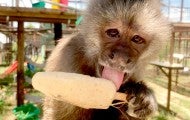

In a quiet corner of Black Beauty Ranch, on a stone plinth beneath a maple tree, there’s an oval etching of a man and a burro. The man is Cleveland Amory, author and founder of the Fund for Animals, and the burro is Friendly, one of the first animals to call the sanctuary home. The two met in 1980...
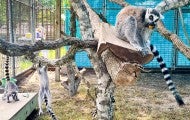
Every morning, the teams at Black Beauty Ranch spread out across 1,400 acres to care for the nearly 650 animals who call the sanctuary home. It’s not an easy task. The sanctuary is home to around 40 species, meaning caregivers need a high level of knowledge about all sorts of animals. Insights into...
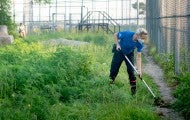
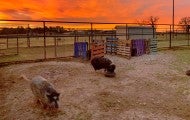
At Black Beauty Ranch, titles like “caregiver” and “maintenance technician” don’t do the people who hold them justice, and they don’t capture the dozens of unique tasks the team carries out every day: figuring out how to get pine sap off a goat’s horn (rub it with peanut oil), learning how to “drag”...

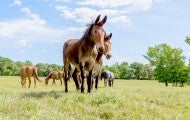

Nestled among honking geese, hooting primates, scurrying lizards and lowing cows, the Black Beauty Ranch pollinator garden is “a different kind of place,” says Master Gardener and volunteer Cynthia Holifield. Before Holifield began her work seven years ago, staff despaired of the barren space behind...